

思辨實驗室
Est. 26.08.31 ·
86
曼陀羅
歡迎來到【思辨實驗室】!這裡沒有標準答案,只有更深刻的理解與觀點。這裡有各種假設性問題,歡迎加入我們一起腦力激盪! 歡迎大家分享一些哲學問題或心理測驗哦~
曼陀羅
The Price of Crossing the Star Gate: Instantaneous Teleportation That Shatters the Flesh, Is It Arrival or Death?
Debate Topic: If the principle of instantaneous teleportation technology is to 'completely decompose the body at point A and precisely reassemble the brain structure and memories with new atoms at point B,' is the process a continuation of the same subject's journey, or has the original subject been killed and a clone born? Scenario Story: Engineer Kai stands before the quantum teleportation pod, preparing to travel to a branch office thousands of kilometers away. This technology is hailed as the greatest transportation revolution in human history, shortening journeys to an instant: after the pod door closes, scanners record the precise arrangement of trillions of atoms in his body, his neural connections, and all memory details. Then, the system completely disintegrates his physical body into nothingness within one microsecond. At the same moment, the reconstruction pod at the destination uses new matter to perfectly reconstruct a 'Kai' with an identical brain, body, and neural circuits according to the data. The individual emerging from the destination pod seamlessly continues all of Kai's memories, familial relationships, and life plans. Subjectively, they feel no interruption in consciousness whatsoever and firmly believe they have simply completed a smooth journey. However, watching the glowing disintegration beam, Kai's finger pauses before pressing the activation button—if the 'him' of this second must first turn to dust, is the one walking out truly himself, or a stranger who believes they are Kai? Question: • As long as memories, personality, and conscious experience are perfectly continued elsewhere, does the individual decomposed before the transporter qualify as 'still alive'?
2026.09.12 PM 6:30 · View Count 31
曼陀羅
The Perfect Virtual Life — The Experience Machine
Debate Topic: When a virtual system can provide an absolutely realistic and supremely blissful life, should a person choose to permanently connect to the machine rather than live an ordinary life in objective reality? Scenario: Thirty-year-old Xiao Chen is an ordinary convenience store clerk. He lives a monotonous life day after day with a meager salary, occasionally enduring the刁难 (diāonán - unreasonable demands) of difficult customers, the suffering of illness, and the failures of romantic relationships. One day, a cutting-edge tech company selected Xiao Chen and handed him a black entry chip. The company has developed a fully enclosed "Dream Life Support Pod." By lying down, plugging in the electrodes, the system will directly stimulate his brain, creating a tailor-made, incredibly brilliant, and perfect virtual life for him: inside, he will become a respected successful entrepreneur, have a loving partner by his side, and live each day feeling fulfilled, confident, and happy. About the "Dream Life Support Pod": • 100% Realistic Once inside, he will completely forget it's a machine and won't feel the slightest bit of falsehood. • Never Wake Up The machine's life support system is extremely stable, guaranteeing he can live in blissful enjoyment for his entire life. However, once activated, there is no possibility of changing his mind and returning to reality. Question: If the happiness you feel in the machine is exactly the same as real happiness, and you will never wake up, does "whether the world is real" still matter to your happiness?
2026.09.09 PM 11:06 · View Count 91
曼陀羅
The Head of State's Scales: A Transaction to Save Lives, Charity or Bribery?
Debate Topic: Should a head of state accept a controversial businessman's massive donation to save desperate debtors from crippling credit card debt, in exchange for awarding him the nation's highest honor? Scenario: A credit card debt crisis has triggered severe social unrest, with many from the lower class driven to despair and suicide, while the government's finances are insufficient to provide aid. At this critical juncture, a notorious tycoon, who made his fortune through high-interest lending, approaches the head of state. He offers to donate 10 billion to fully pay off credit card debts, directly saving thousands of lives. His sole condition: the head of state must award him the 'National Medal of Highest Honor' to whitewash his reputation. If the head of state signs, the nation's highest honor becomes a bargaining chip. If they refuse outright, thousands of lives will lose their last lifeline. Question: • If you were the head of state, would you accept the businessman's offer?
2026.09.06 PM 8:53 · View Count 69
曼陀羅
The Price of Dirty Hands: Can a Detective Defuse a Bomb by Framing Someone?
Debate Topic: To prevent a bombing that would cause tens of thousands of casualties, is it justifiable for a detective to intentionally fabricate fingerprints to frame a suspect in order to obtain a search warrant when legal evidence is lacking? Scenario: With thirty minutes left until the New Year's Eve countdown, tens of thousands of people gathered in the city center plaza, and a bomb of immense power was about to detonate. Detective Chen, known for his dirty hands, overheard the main suspect confirming the detonation time over the phone. However, this illegal and vague recording could not be used to obtain a search warrant from the court. Time was running out, and standard procedures could no longer prevent the tragedy. Chen gritted his teeth and imprinted the main suspect's fingerprints from a lighter onto a previous piece of evidence, claiming "ironclad evidence was found." This prompted an emergency search by the police and prosecution, successfully defusing the bomb and saving everyone present. However, during a post-incident review, Chen's act of fabricating evidence was completely exposed. Question: •To save tens of thousands of lives from a devastating disaster, is it morally justifiable for law enforcement to intentionally frame someone and break due legal process? Additional Question: •Since Chen's dirty hands successfully saved everyone at the scene, should the judicial system exempt him from criminal responsibility and consider it a meritorious deed?
2026.09.03 PM 6:53 (Modified) · View Count 115
曼陀羅
The Price of Brain Remodeling—When an Extremely Dangerous Murderer is Thoroughly Transformed into a Saint

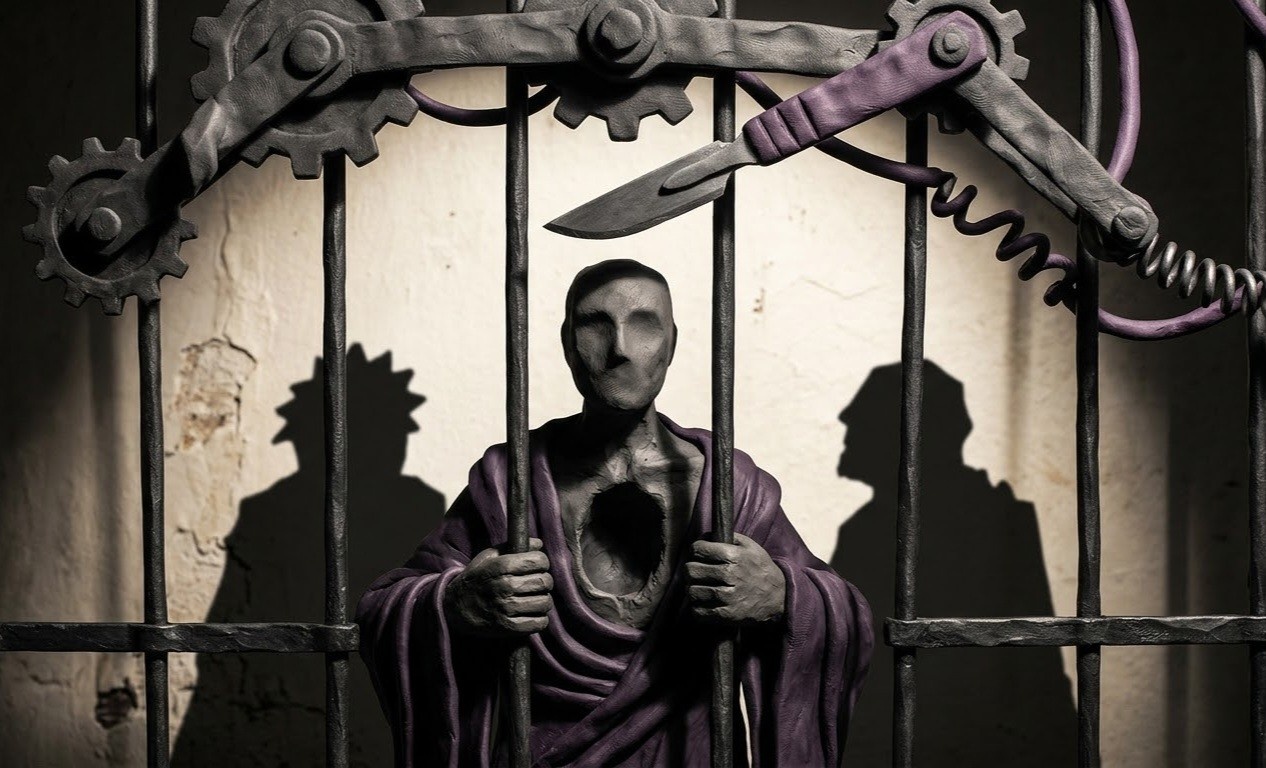
Debate Topic: If technology could, through brain surgery, completely remodel an extremely dangerous serial killer into an 'absolutely good and helpful person,' should we perform the surgery on him as an alternative to long-term imprisonment? Scenario: Zhang San was a brutal serial killer. During his trial, the medical community made a breakthrough with an advanced neural remodeling surgery. This technology could precisely reorganize the brain's neural networks and prefrontal cortex, completely eliminating a personality that was extremely violent and lacked empathy, and reshaping it into a new personality that is 'absolutely good, gentle, and helpful.' The consequences of the surgery are irreversible—the original Zhang San, full of aggression and guilt, would cease to exist mentally, replaced by a kind citizen ready to dedicate himself to society. Questions: Should we perform the brain remodeling surgery on Zhang San, allowing him to return to society and do good deeds, or should he remain in prison for long-term confinement or even execution? If the surgery is performed, should 'the current, absolutely good Zhang San' still be punished for the crimes committed by 'the past, cruel Zhang San'? ~ Feel free to share your arguments!
2026.09.01 PM 9:58 · View Count 59
曼陀羅
The Classic Trolley Problem
Scenario Story: A trolley is running on the tracks. On the path the trolley is currently on, five people are tied up and unable to move. The trolley is about to run them over. You are standing next to a lever that can change the trolley's track. If you pull this lever, the trolley will switch to another track. However, there is one person tied up on that other track as well. You have two options: •Do nothing, and let the trolley run over the five people on its normal course. •Pull the lever, change tracks, and have the trolley run over the one person on the other track. -------------------------------------------------------------- The Core Logic: Can human lives be measured by quantity? •When you choose to pull the lever (Utilitarianism) "Pursuit of the greatest good for the greatest number" In extreme situations, the value of human lives can be added or subtracted. The sum of suffering and loss for 5 lives is greater than for 1 life. •When you choose not to pull the lever (Kantianism) The value of life is infinite and sacred, and infinity cannot be mathematically compared. (5 × ∞ is not greater than 1 × ∞). Everyone has inalienable human rights, and a minority cannot be sacrificed to save the majority.
2026.08.31 PM 11:38 (Modified) · View Count 35
2026.08.31 PM 8:03 (Modified) · View Count 12
曼陀羅
After Memory Loss, Does Guilt Remain?
Debate Topic: If a murderer completely loses all past memories (including the crime and self-awareness), should they still bear legal and moral responsibility? Case Scenario: Story: One year ago, Zhang San committed a brutal murder. During his arrest, he was involved in a severe car accident, resulting in permanent and irreversible "dissociative amnesia." Today, Zhang San has forgotten his name, his past, and any memory of the murder. Personality tests and psychological evaluations show him to be gentle, helpful, and deeply shocked and unable to comprehend his past criminal actions. Question: Should "the current Zhang San" be sent to prison to serve his sentence?
2026.08.31 PM 2:45 · View Count 92